
📌 Key takeaways
- Goa roads are generally well-maintained; NH66 is a smooth 4-lane highway connecting North and South
- Speed limits range from 40 km/h in towns to 80 km/h on highways — follow signage strictly
- Fuel stations are plentiful along main roads; keep half-tank when heading to remote areas
- Avoid driving after 11 PM on unfamiliar village roads due to poor lighting
- Renting a car gives you 3x more flexibility than taxis at half the cost
Planning a road trip in Goa? Whether you are a first-time visitor or a returning traveler, understanding Goa's roads, rules, and routes makes all the difference between a stressful drive and an unforgettable adventure. With a car rental in Goa, you gain the freedom to explore at your own pace — but knowing the local driving conditions ensures you do it safely and enjoyably.
This ultimate Goa road trip guide covers everything from road conditions and traffic rules to the best scenic routes and essential safety tips. We have been operating as a car rental Goa service since 2018 and have helped thousands of travelers navigate these roads. Here is everything we have learned, distilled into one comprehensive guide for 2026.
1 Road Conditions in Goa – What to Expect
Goa's road infrastructure has improved significantly over the past decade. The state benefits from national highway connectivity, well-maintained state roads, and an expanding network of internal roads. However, conditions vary considerably depending on where you are driving, and understanding these differences is crucial for planning your car rental road trip effectively.
National Highway 66 (NH66)
The backbone of Goa's road network, NH66 runs north-south through the state, connecting Maharashtra border to Karnataka border. This is a well-maintained four-lane highway with smooth asphalt, clear lane markings, and adequate signage. Speed limit is 80 km/h. Most of your inter-city travel in Goa will use sections of this highway. The stretch between Panaji and Margao (33 km) takes approximately 40 minutes in normal traffic. This is the road you will use most frequently with your car rental in Goa for traveling between North and South.
State Highways and Major Roads
State highways connecting major towns (Mapusa-Panaji, Panaji-Ponda, Margao-Canacona) are generally good two-lane roads. They are well-surfaced but can be narrow in places with frequent speed breakers near villages. You will encounter buses, trucks, and two-wheelers sharing these roads. Average speed on state highways is 40-50 km/h due to frequent villages and commercial areas. Road signage is improving but still inconsistent in some areas — Google Maps is your best navigation tool.
Coastal Roads and Village Roads
This is where things get interesting. Coastal roads connecting beaches (like the Candolim-Calangute-Baga-Anjuna stretch) are narrow, winding, and often have potholes — especially after the monsoon season. Village roads in interior Goa can be single-lane with no dividers. During monsoon (June-September), some roads develop waterlogging. If you plan extensive exploration of off-beat areas, we recommend renting an SUV rather than a hatchback for better ground clearance and suspension comfort on these uneven surfaces.
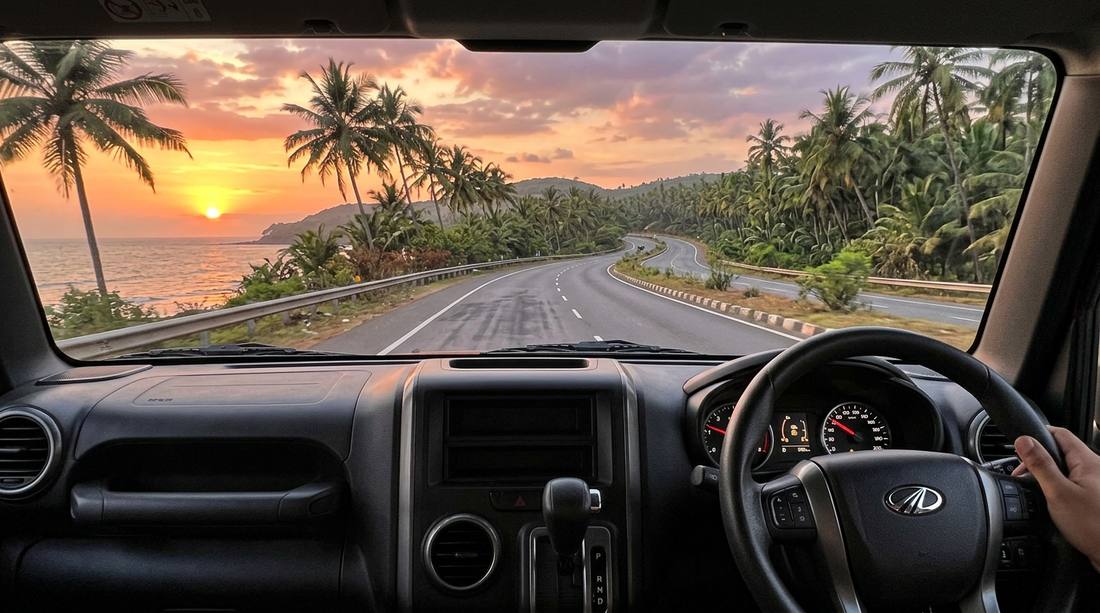
Road Surface Quality by Region
North Goa tourist areas (Calangute, Baga, Anjuna) have decent roads but heavy traffic during peak season makes progress slow. The roads around Panaji city are the best-maintained in Goa with proper drainage and lane markings. South Goa roads are generally less congested but the stretch from Margao to Palolem passes through some rough patches near Canacona. The road to Dudhsagar via Collem is a mix of highway and rural roads requiring careful driving. The newest roads in Goa connect to Mopa Airport — these excellent 4-lane roads were built in 2023 and are a pleasure to drive on.
2 Traffic Rules & Speed Limits in Goa
Goa follows standard Indian traffic rules, but enforcement has become stricter in recent years with the introduction of traffic cameras and regular police checkpoints. As someone using a car rental in Goa, it is essential to follow all rules to avoid fines and ensure a smooth trip without legal complications.
Speed Limits
National Highways: 80 km/h for cars. State Highways: 60 km/h. Within city and town limits: 40 km/h. School zones: 25 km/h. These limits are strictly enforced through speed cameras on NH66, particularly between Porvorim and Mapusa junction. Fines for speeding start at ₹1000 and can go up to ₹2000 for significant violations. Multiple offenses can result in license suspension. Always watch for speed limit signs, especially when entering town limits where the speed drops suddenly from 60 to 40 km/h.
Seatbelt and Phone Rules
Seatbelts are mandatory for driver and front passenger — the fine is ₹1000 for non-compliance. Rear seatbelts are also technically required. Using a mobile phone while driving attracts a steep ₹5000 fine. We strongly recommend using a phone mount (available at most phone shops in Goa for ₹200-500) for GPS navigation. All Rentiago rental cars come with a phone holder pre-installed for your convenience so you can navigate hands-free from the moment you pick up the car.
Drink Driving Laws
Goa has zero tolerance for drunk driving despite its reputation as a party destination. The legal blood alcohol limit is 0.03% — essentially, even one drink can put you over the limit. Penalties include a ₹10,000 fine and possible imprisonment for first offense. Police conduct regular breath-analyzer checks, especially on weekend nights near party areas in North Goa (Baga, Anjuna, Tito's Lane area). If you plan to drink, use a taxi for that evening and keep your rental car parked safely at your hotel or accommodation.
Parking Rules and Fines
No-parking zones in Panaji and Margao cities are strictly enforced by the traffic police. Vehicles parked in no-parking areas will be towed — recovery costs ₹1500 or more plus the fine. Always use designated parking areas which are clearly marked. Most beaches have paid parking lots charging ₹50-100 for cars. Yellow curb markings mean absolutely no parking; white markings indicate legal parking zones. Double parking is also fined ₹500.
3 Best Scenic Driving Routes in Goa
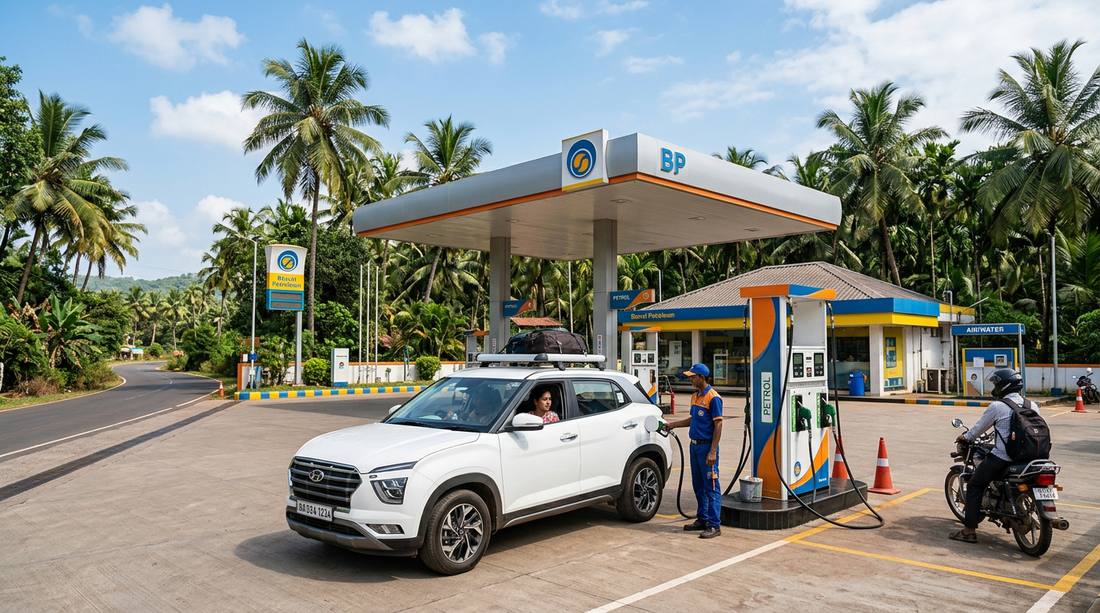
One of the greatest joys of having a car rental in Goa is discovering the stunning scenic routes that connect different parts of this beautiful state. Here are our top five recommended drives that combine great views with comfortable road conditions and memorable experiences.
Route 1: Candolim to Vagator Coastal Drive (15 km, 45 min)
This iconic coastal route passes through Fort Aguada, Sinquerim Beach, and offers intermittent sea views through palm groves. The road winds through Candolim, Calangute, Baga, Anjuna, and ends at Vagator with its dramatic red cliffs. Best driven during golden hour (5-6:30 PM) when the setting sun illuminates the western coastline in warm orange tones. Stop at Chapora Fort for sunset views that made the Bollywood film Dil Chahta Hai famous. The road is narrow but well-surfaced — drive slowly and enjoy the views.
Route 2: Panaji to Old Goa Riverside Drive (10 km, 20 min)
Follow the Mandovi River eastward from Panaji's Miramar Beach through Dona Paula junction to the historic churches of Old Goa. The road runs alongside the wide river with views of ferry boats crossing, fishing trawlers, and mangrove islands. Early morning drives here are particularly beautiful with mist rising from the water surface. Continue past Old Goa to Divar Island ferry point for an extended adventure — take the ferry across with your car and explore this quiet island that time forgot.
Route 3: Margao to Palolem via Cabo de Rama (75 km, 2 hrs)
Instead of the direct highway route to Palolem, take the coastal detour via Cabo de Rama Fort for one of Goa's most dramatic drives. The road passes through cashew plantations and traditional villages with old Portuguese-style houses. The fort itself offers 360-degree clifftop views of the coastline stretching in both directions. The final descent from the fort area into Palolem reveals a crescent bay that will take your breath away. This is the definitive South Goa scenic drive and requires a full morning to enjoy properly with photography stops.
Route 4: Ponda Temple Circuit (30 km loop, 1.5 hrs)
This inland route connects several important Hindu temples — Mangeshi, Shanta Durga, Nagesh, and Mahalasa — each with unique architecture blending Hindu and Portuguese colonial styles. The road passes through spice plantation territory with aromatic air and lush tropical greenery. Combine the drive with a spice farm visit for a complete cultural experience away from the beaches. The roads are good two-lane highways with minimal traffic — a relaxing change from busy coastal roads.
Route 5: Mopa Airport to Arambol via Pernem (35 km, 50 min)
The newest scenic route in Goa connects the Mopa International Airport to Goa's northernmost beaches. The road passes through Pernem's countryside — terraced rice paddies turning green in monsoon, traditional Goan temple towns with their distinctive architecture, and eventually the dramatic laterite cliffs leading down to Arambol and Keri beaches. This route is perfect for visitors arriving at Mopa who want to head straight to North Goa's less-touristy, more authentic beaches without passing through commercial areas first.
4 Fuel Stations & Parking Guide
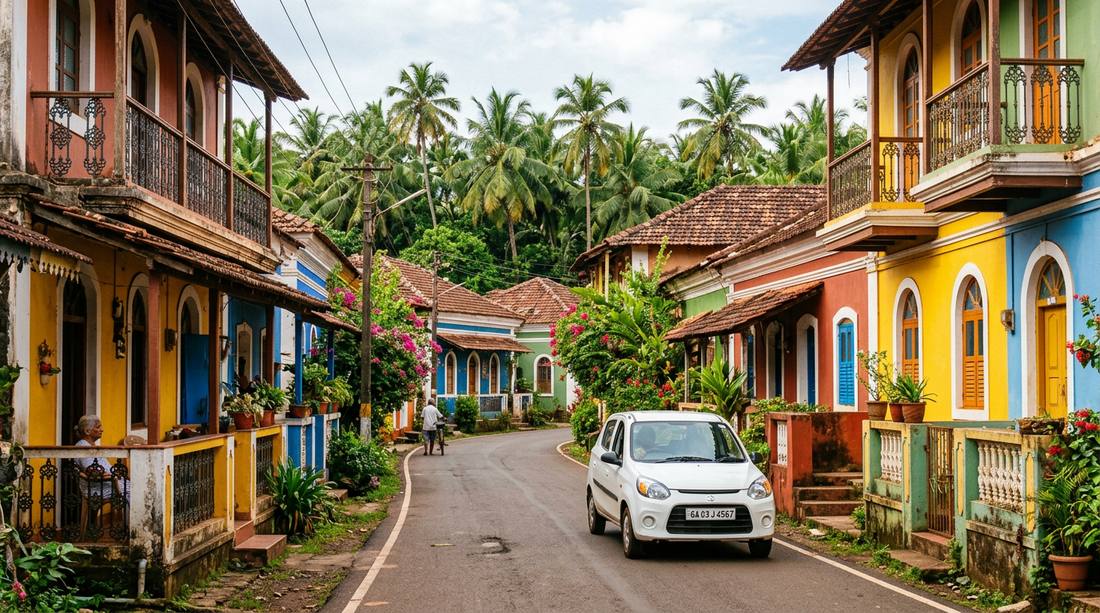
Running out of fuel or struggling to find parking can quickly ruin a road trip experience. Here is your complete practical guide to fueling up and parking your car rental vehicle anywhere in Goa without stress or surprises.
Fuel Station Network
Goa has approximately 90 fuel stations spread across its 3,700 sq km area — that is roughly one station every 40 sq km. Major petroleum brands (Indian Oil, Bharat Petroleum, Hindustan Petroleum) all have a strong presence. You will find stations every 5-10 km on NH66 and major state highways. However, in remote areas (Netravali, parts of Canacona, Sanguem interior), stations can be 15-20 km apart. Plan accordingly when heading off the beaten path — a good rule is to never let your tank drop below half when driving to remote destinations.
Fuel Prices and Payment Tips
Petrol prices in Goa are among the lowest in India due to lower state taxes — approximately ₹90-95 per liter in 2026. This is noticeably cheaper than neighboring Maharashtra or Karnataka. Most stations accept UPI payments (Google Pay, PhonePe, Paytm) and credit/debit cards without any issues. Some smaller stations in villages may be cash-only, so carry ₹2000-3000 in cash as backup. A full tank in most rental hatchbacks (35-40 liters) gives you 500-600 km range — enough for 2-3 days of Goa exploration.
Parking at Popular Tourist Spots
Here is a detailed parking guide for major destinations: Calangute/Baga Beach — Multiple paid lots (₹50-100 per day), can fill up by 11 AM on weekends in peak season, arrive early. Anjuna Flea Market — Dedicated large parking ground (₹50). Old Goa Churches — Free ASI parking lot that is large and rarely full. Panaji City — Metered street parking (₹20-30/hr) and multi-level parking at the Mala area near the central market. Palolem Beach — Several private lots 200m from beach entrance (₹50). Dudhsagar at Collem — Free parking at the Jeep safari stand with security.
Overnight Parking Safety
Most hotels and guesthouses across Goa offer free parking for their guests. If your accommodation does not have dedicated parking, ask locally — nearby shops or residences often rent out space for ₹100-200 per night. Never leave valuables visible in a parked car, even in seemingly safe areas. Use covered parking whenever available during monsoon to protect against heavy rain. Rentiago provides 24/7 assistance if you face any parking-related issues with your rental vehicle anywhere in Goa.
5 Night Driving Safety in Goa
Night driving in Goa requires significantly more caution compared to daytime travel. While the major highways like NH66 are reasonably well-lit, many tourist-area roads and village roads have minimal or no street lighting. Here are essential safety guidelines for driving your car rental in Goa after dark.
Roads to Avoid at Night
Based on our experience, we recommend avoiding these roads after dark: Coastal roads between beaches (narrow, poorly lit, sharp unmarked curves). Village roads in interior Goa (stray animals rest on warm road surfaces, no lane markings). The road from Ponda to Dudhsagar/Collem (winding forest road with zero lighting). Any unfamiliar route you have not driven in daylight first. The road from Anjuna to Vagator via Ozran has particularly poor lighting with tight hairpin curves that catch even experienced drivers off guard.
Safe Night Driving Practices
Stick to main highways (NH66) and well-known arterial routes after dark. Use high beams on empty straight roads but dip immediately for oncoming traffic — this is both courteous and legally required in India. Watch for two-wheelers without reflectors — this is very common in Goa as many scooter riders wear dark clothing without any reflective gear. Reduce speed by 20-30% compared to your comfortable daytime speed. Keep windows slightly open to hear approaching vehicles on narrow roads where visual cues may be limited.
Dealing with Animals on Roads
Stray dogs, cows, and even buffalo on roads are a common hazard in Goa, especially between 10 PM and 5 AM when animals rest on warm road surfaces. They are extremely difficult to spot in low-light conditions until you are very close. Drive at moderate speeds on all village roads and use your horn before blind curves as a warning. If you see one animal on the road, assume there are more nearby. This precaution is particularly important on the roads between Mapusa-Siolim, Ponda-Margao, and the Canacona interior roads.
Emergency Contacts to Save
Keep these numbers saved in your phone before starting your trip: Police (100), Ambulance (108), Fire (101), Goa Traffic Police (+91-832-2421461), Rentiago 24/7 Emergency Helpline (+91-9923352923). In case of a vehicle breakdown at night, pull completely off the road if possible, immediately turn on hazard lights, and call us. We provide roadside assistance within 45 minutes anywhere in Goa, even at 3 AM. If you cannot pull off the road, stay in the car with seatbelt on and hazards blinking until help arrives.
6 Frequently Asked Questions
Do I need an international driving permit to drive in Goa?
What side of the road do you drive on in Goa?
Are Goa roads safe during monsoon season?
How much does fuel cost for a Goa road trip?
Is GPS and Google Maps reliable in Goa?
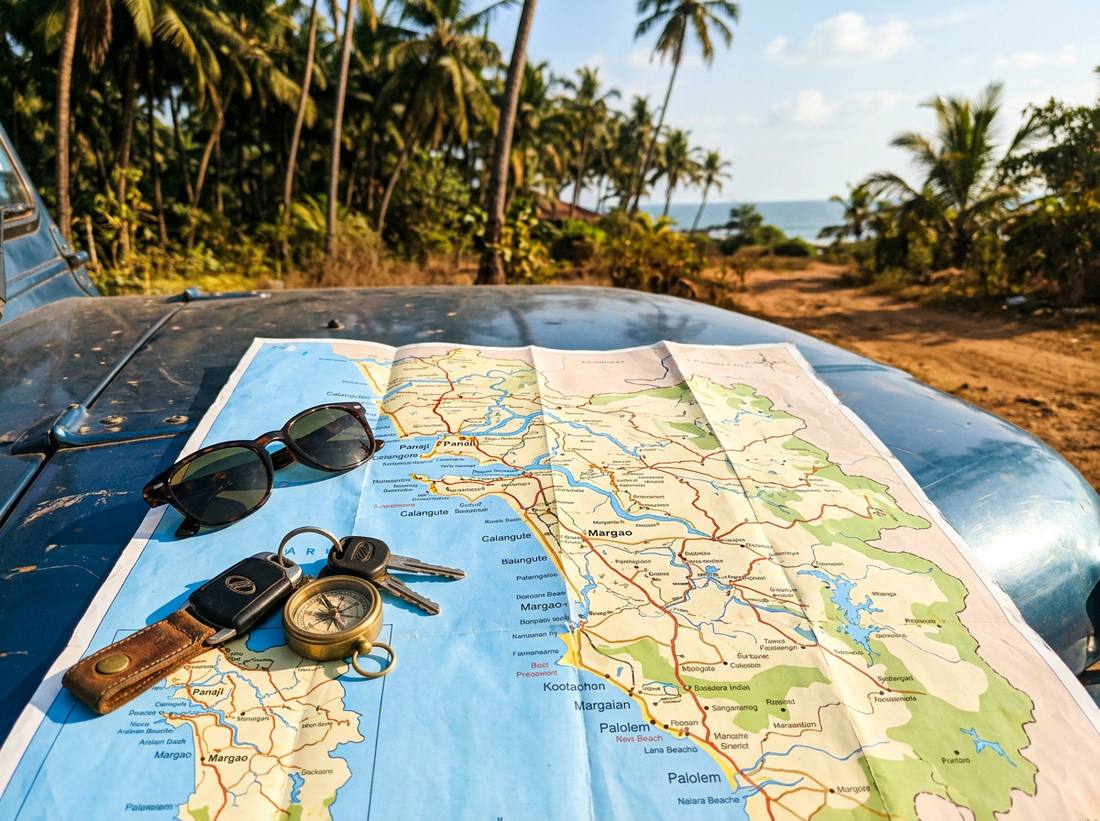
Free Goa Driving Route Map PDF
Get our detailed PDF map with all scenic routes, fuel stations, parking spots, and speed camera locations marked for your Goa road trip.