
📌 Key takeaways
- You need a valid driving license, government ID, and security deposit to rent a car in Goa
- Always inspect the car thoroughly before driving off — document any existing scratches with photos
- Choose your car based on trip type: hatchback for couples, SUV for families or monsoon travel
- Basic insurance is included; comprehensive coverage is strongly recommended for first-timers
- Return the car with the same fuel level and on time to avoid extra charges
Renting a self-drive car in Goa for the first time can feel overwhelming — what documents do you need? How do you inspect the vehicle? What about insurance and deposits? These are common concerns that every first-time renter faces when planning their Goa trip. As Goa's trusted car rental service since 2018, we at Rentiago have helped thousands of first-timers navigate this process smoothly and confidently.
This comprehensive guide covers the 10 most essential tips for renting a self-drive car in Goa. Whether you are a domestic traveler from another Indian state or an international tourist visiting India for the first time, these practical tips will ensure your car rental in Goa experience is hassle-free, safe, and enjoyable from the moment you pick up the keys to the moment you return the vehicle.
1 Documents You Need for Car Rental in Goa
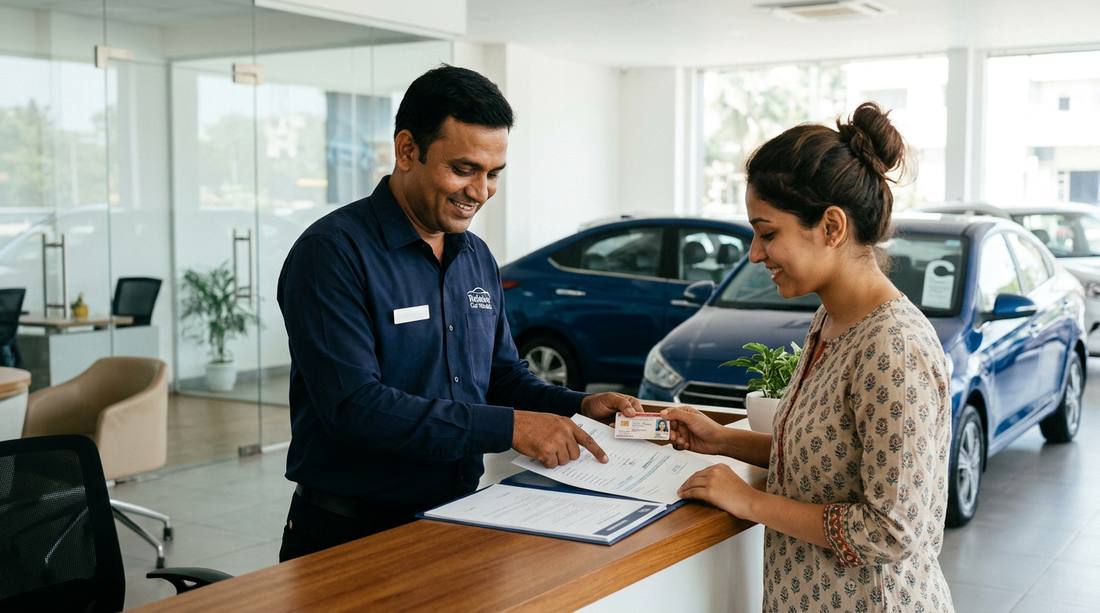
Before you can drive off in your rental car, you need to present certain documents for verification. Having these ready in advance saves valuable time at pickup and ensures there are no last-minute surprises or delays that could eat into your holiday time. Here is the complete documentation checklist for renting a self-drive car in Goa.
For Indian Citizens
A valid Indian driving license is the primary and most important requirement. The license must be original (photocopies and digital DigiLocker versions are not accepted by most providers) and should be valid for at least the duration of your rental period. Both permanent licenses and learner's licenses are technically acceptable, though some providers require a permanent license for higher vehicle categories like SUVs and luxury cars. Along with your driving license, you need one government-issued photo ID — Aadhaar card, passport, or voter ID card. At Rentiago, we accept any valid government ID and make the verification process as quick and hassle-free as possible, typically completing it in under 5 minutes.
For International Tourists
International visitors need a valid International Driving Permit (IDP) along with their home country driving license and passport. The IDP must be obtained from your home country's automobile association before traveling to India — it absolutely cannot be issued within India. Some countries have reciprocal license recognition agreements with India, but an IDP is always the safest and most universally accepted option. If you do not have an IDP or your home license is not in English, you can still hire a car with a professional driver through Rentiago at competitive daily rates.
Security Deposit Requirements
Most car rental services in Goa require a refundable security deposit at the time of pickup. At Rentiago, the deposit ranges from ₹5,000 for budget hatchbacks to ₹10,000 for SUVs and ₹15,000 for luxury cars. This can be paid via cash, UPI transfer, or card payment — whichever is most convenient for you. The deposit is fully refunded upon safe return of the vehicle in the same condition. We do not deduct for normal wear and tear such as minor dust or sand — only for damage clearly beyond ordinary careful use.
2 Choosing the Right Car for Your Goa Trip
Goa's diverse terrain — from smooth national highways to narrow winding beach roads to climbing ghat sections — means your choice of rental car genuinely matters for comfort and safety. Here is our expert guide to picking the perfect vehicle for your specific needs with your car rental Goa booking.
For Couples and Solo Travelers
A hatchback like the Maruti Swift, Maruti Baleno, or Hyundai i10 is perfect for couples and solo travelers. These cars offer excellent fuel efficiency (18-20 km/l), easy parking in tight beach-area spots, and comfortable seating for two with luggage in the boot. Starting at just ₹900/day at Rentiago, they are also the most budget-friendly option. The Swift's peppy 1.2L engine handles Goa's occasional hills effortlessly while keeping fuel costs minimal for your overall trip budget.
For Families (4-5 People)
A sedan like the Honda Amaze or Hyundai Aura, or a compact SUV like the Hyundai Venue or Maruti Brezza, offers significantly more space for family luggage and comfortable rear seating for children on longer drives. If you have more than two large suitcases, avoid hatchbacks as boot space becomes a constraint. SUVs also provide better elevated visibility on narrow village roads, making driving less stressful for those unfamiliar with Indian road conditions and traffic patterns.
For Groups (6-7 People)
An MPV like the Maruti Ertiga or the premium Toyota Innova Crysta is ideal for larger groups of friends or extended families. These vehicles seat 6-7 people comfortably with proper legroom and have substantial boot space for everyone's luggage. The Innova Crysta is particularly recommended for long-distance day trips to Dudhsagar or excursions across the border to Karnataka. These larger vehicles start at ₹2,500/day with Rentiago and offer the best per-person value for group travel.
For Monsoon Travel or Adventure
An SUV like the Hyundai Creta, Kia Seltos, or the adventurous Mahindra Thar is strongly recommended during the monsoon season (June-September) or if your itinerary includes visiting Dudhsagar Falls, remote South Goa beaches accessible via unpaved roads, or interior wildlife areas with forest tracks. Higher ground clearance of 190-200mm handles waterlogged roads and uneven terrain safely where a hatchback with 165mm clearance might struggle. SUV rentals start at ₹1,500/day with Rentiago.
3 Inspecting the Car Before Driving Off
This is perhaps the single most important tip for any first-time car renter anywhere in the world. A thorough pre-rental inspection protects you from being unfairly charged for pre-existing damage upon vehicle return. At Rentiago, we always conduct this inspection together with the renter and document everything digitally — but here is what you should check regardless of which provider you choose in Goa.
Exterior Inspection Checklist
Walk around the entire car systematically and look for: scratches on any panel, dents (even small ones), paint chips, cracked or chipped windshield, damaged or cracked mirrors, tire condition (check tread depth and visual pressure), and any body panel gaps or misalignment suggesting previous accident repair. Take clear, well-lit photos of all four sides, the roof, both bumpers, and close-ups of any existing damage — time-stamped photos on your phone serve as undeniable proof. Check that all lights work: headlights (both high and low beam), tail lights, brake lights, turn indicators on both sides, reverse lights, and fog lights.
Interior Inspection
Start the engine and check the dashboard for any warning lights — they should all turn off within a few seconds of starting (except the handbrake light if engaged). Test the air conditioning on all fan speeds, windshield wipers on all speeds (crucial for monsoon season), horn volume, both side mirrors adjustment, seat adjustments, and all four door locks from inside. Ensure the spare tire, jack, wheel wrench, and first-aid kit are all present in the boot. Check the fuel gauge level and note the reading — you should return the car at the same fuel level. Verify seat upholstery and floor mat condition.

Documentation of Vehicle Condition
At Rentiago, we provide a detailed vehicle condition report form that both parties sign before handover. This document notes all existing marks, scratches, and overall condition rating. If your chosen provider does not offer this, create your own record by taking a complete 360-degree video of the car with audio commentary noting any existing damage you observe. This simple 2-minute step can save you from disputes worth thousands of rupees at return time — it is the single best protection for your security deposit.
4 Insurance & Deposits – Understanding Your Coverage
Insurance is one of the most overlooked aspects of renting a car, yet it is absolutely crucial for protecting yourself financially in case of accidents, theft, or damage. Many first-time renters in Goa do not fully understand what is and is not covered. Here is what you need to know about car rental in Goa insurance options.
Basic Insurance (Included with All Rentals)
All legitimate car rental services in Goa are legally required to include basic third-party insurance as mandated by Indian motor vehicle law. This covers damage you might cause to other vehicles, people, or property in an accident — but critically, it does NOT cover damage to your rental car itself. If you are in a single-car accident (hitting a wall, driving into a pothole, scraping against a post, etc.), basic insurance provides zero protection for repair costs to the rental vehicle.
Comprehensive Coverage (Strongly Recommended)
For an additional ₹200-500 per day depending on the vehicle category, you can opt for comprehensive coverage that protects against damage to the rental car as well as third parties. This typically includes a deductible or excess of ₹5,000-10,000 — meaning you pay the first portion of any damage claim, and insurance covers everything above that amount. For first-time drivers in Goa who are unfamiliar with the roads, traffic patterns, and driving culture, we very strongly recommend this option for complete peace of mind throughout your trip.
What Insurance Does NOT Cover
Regardless of which insurance level you choose, the following scenarios are typically excluded from coverage: damage caused while driving under the influence of alcohol or drugs, cosmetic damage to tires and wheel rims from potholes or curbs, interior damage (cigarette burns, food stains, upholstery tears), loss of personal belongings from the car, any damage caused by unauthorized drivers not listed on the rental agreement, driving the car outside Goa state boundaries without prior written permission from the rental company, and damage from off-road driving in non-designated areas.
5 Driving Etiquette & Tips for Goa Roads
Indian driving culture can be significantly different from what you may be used to in other countries or even other Indian states. Understanding local driving etiquette and unwritten rules helps you stay safe and reduces stress considerably during your car rental road trip experience in Goa.
Horn Usage in India
In India, the horn is used as a communication tool rather than an expression of aggression or frustration as in Western countries. A short honk before blind curves, while overtaking, or when approaching uncontrolled intersections is expected, appropriate, and even appreciated by other road users. Heavy trucks and buses will often have "Horn OK Please" or "Blow Horn" written on their rear — this is a literal invitation for you to honk before attempting to pass them so they know you are there. Do not hesitate to use your horn when needed.
Overtaking Etiquette on Goa Roads
On two-lane roads (which make up most of Goa's network outside NH66), always overtake from the right side only. Flash your headlights briefly to signal your intent to overtake the vehicle ahead. Important cultural note: if a vehicle ahead gives a left indicator signal, it usually means they are giving you permission and space to pass safely — this is counter-intuitive for visitors from many countries where a left indicator means turning left. Never overtake on blind curves, hill crests, narrow bridges, or near intersections where cross traffic may appear.

Sharing Roads with Two-Wheelers
Goa has an extremely high density of scooters and motorcycles — they are the primary transport for locals. They will appear from all directions, sometimes without looking or signaling, and may weave between cars in traffic. Always check all mirrors before changing lanes, turning, or even slowing down significantly. Give two-wheelers generous space — they are far more vulnerable in any collision. Near popular beaches and market areas, two-wheelers may weave unpredictably as riders look for parking or navigate to beach entrances. Reduce speed significantly in these areas and exercise extra patience.
Right of Way at Intersections
Many intersections in Goa, especially outside Panaji and Margao city centers, lack traffic signals entirely. The practical (though not always legal) rule is: larger vehicles tend to assume right of way. However, always yield to vehicles that are already established in the intersection before you arrive. At roundabouts, yield to traffic coming from your right (already circulating in the roundabout). When in doubt about who has priority, simply slow down or stop and let aggressive drivers pass first — your personal safety and the safety of your passengers is infinitely more important than asserting technical right of way.
6 The Return Process – Avoid Extra Charges
A smooth return is just as important as a smooth pickup for your overall car rental in Goa experience. Here is exactly how to return your rental car without any surprise charges, deductions, or complications that could sour the end of an otherwise perfect holiday.
Fuel Level at Return
Return the car with the same fuel level as it had at pickup. At Rentiago, we provide all cars with a full tank and expect a full tank on return. If the fuel level is lower than the pickup level, we charge the difference at current pump rates plus a ₹200 refueling service fee for the inconvenience of having to refuel before the next rental. Fill up at any petrol pump near your return point — there are stations along every main road in Goa. Keep the fuel receipt as proof of your fill-up.
Cleanliness Standards
The car does not need to be showroom-clean or professionally detailed, but please remove all personal belongings, food containers, water bottles, and general trash before returning. Excessive sand accumulation (from multiple beach visits without any cleaning), thick mud from off-road driving, or stains on upholstery from food or drink spills may incur a cleaning fee of ₹500-1000 depending on severity. A basic 5-minute cleanup of the interior before return easily avoids this charge entirely — most travelers find this reasonable and straightforward.
Return Timing
Return the car on time as per your rental agreement. Most rentals work on 24-hour cycles — so if you picked up the car at 10 AM on Monday, your return time is 10 AM on the agreed return date. Late returns of up to 2-3 hours usually fall within a grace period (this varies by provider — confirm at pickup). Beyond the grace period, you may be charged for an additional half-day or even a full extra day. At Rentiago, we offer a generous 3-hour grace period as standard for all rentals, giving you comfortable buffer time.
Final Return Inspection
Always be present during the return inspection rather than just leaving the keys. The provider will check for any new damage by comparing against the pickup condition report and photos. If you thoroughly documented the car condition at pickup (as recommended in our inspection tip above), any disputes about whether damage is new or pre-existing can be resolved quickly and fairly with photographic evidence. Your security deposit refund at Rentiago typically processes within 24 hours for digital payments or immediately for cash deposits.
Pro Tip: Book your car rental in Goa at least 3-5 days in advance during peak tourist season (November-February). Last-minute bookings during this period may have limited vehicle choices and higher prices. Off-season (May-September) usually has immediate availability, wider vehicle selection, and significantly better rates — up to 30-40% lower.
7 Frequently Asked Questions
What is the minimum age to rent a car in Goa?
Can I take the rental car outside Goa state?
What happens if I get a traffic fine while driving the rental?
Is there a kilometer limit on car rentals in Goa?
Can someone else drive my rental car?
First-Time Renter's Checklist
Get our comprehensive printable checklist covering all required documents, detailed inspection points, insurance options, and return process tips.