
📌 Key takeaways
- Monsoon in Goa (June-September) offers lush green landscapes, dramatic waterfalls at full force, and 30-40% lower rental prices
- SUVs are strongly recommended for monsoon driving due to potential waterlogged roads and reduced visibility
- Dudhsagar Waterfalls are at their most spectacular during monsoon — an absolute must-visit destination by car
- Avoid unfamiliar coastal roads during heavy rain; stick to main highways like NH66 for maximum safety
- Car rental rates drop 30-40% during monsoon making it the best value season for budget-conscious travelers
Most tourists avoid Goa during monsoon, but savvy and experienced travelers know that June to September reveals a completely different — and equally magical — side of this coastal paradise. The landscapes transform into impossibly vivid green, waterfalls thunder at their full spectacular force, rental prices plummet to annual lows, and the beaches transform into dramatic storm-watching theaters that are breathtaking to experience. With the right preparation and a suitable car rental in Goa, monsoon season can genuinely be the most memorable and unique time to visit this state.
However, driving in monsoon rain requires extra caution, specific vehicle choices, and solid knowledge of which roads remain safe and which to avoid completely. This comprehensive monsoon driving guide shares everything we have learned from operating our car rental Goa service year-round since 2018 through every monsoon season — including practical safety tips that could genuinely protect both your trip plans and your personal safety.
1 Why Visit Goa in Monsoon – The Hidden Paradise
While approximately 80% of Goa's annual tourism happens between October and March during the dry season, the monsoon months from June through September offer unique experiences and visual spectacles that you simply cannot get during crowded peak season at any price. Understanding exactly what makes monsoon Goa special helps you appreciate why braving the occasional rain shower is absolutely worth it for adventurous travelers.
Natural Beauty at Its Absolute Peak
Goa transforms into an emerald paradise during monsoon. Rice paddies across the state turn vivid shades of green, forests become incredibly dense and lush with new growth, and every hillside sprouts colorful wildflowers and flowering creepers. The Western Ghats mountain range (visible from eastern Goa) are draped continuously in dramatic mist and dotted with countless seasonal waterfalls cascading down every cliff face. Photographers and nature lovers will find monsoon Goa far more visually stunning and rewarding than the brown-and-dry post-summer landscape. With a car rental, you can chase these spectacular views across the entire state — from Vagator's dramatic rain-lashed red cliffs in the north to Netravali's misty ancient forests in the deep south.
Waterfalls in Full Thundering Glory
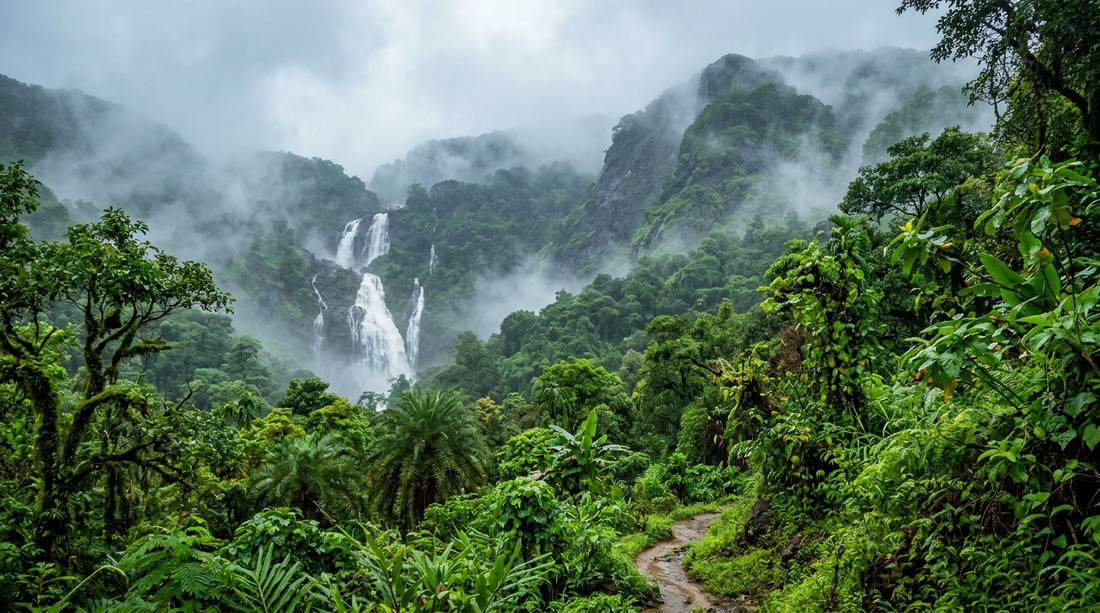
Dudhsagar Waterfalls, reduced to a mere thin trickle during the hot summer months, becomes a thundering 310-meter four-tiered cascade during peak monsoon that you can hear from kilometers away. Harvalem Waterfalls near Sanquelim, the scenic Arvalem Caves waterfall, and literally dozens of unnamed seasonal cascades along the Western Ghat escarpment come alive only during this magical season. These are genuinely unique experiences available exclusively to monsoon visitors — and all are best accessed comfortably by having your own car. The raw sound and mist spray of Dudhsagar at full monsoon flow in August is an experience you will remember for the rest of your life.
Incredible Financial Value
Monsoon is hands-down Goa's most affordable travel season across every expense category. Hotel and resort prices drop a dramatic 40-60% from peak season rates across all categories from budget to luxury. Car rental in Goa rates decrease by 30-40% — at Rentiago, our monsoon special rates start from just ₹700/day for well-maintained hatchbacks and ₹1200/day for capable SUVs. Restaurants across Goa offer monsoon menu specials and discounts to attract the reduced number of visitors. Flight tickets to Goa from all major Indian cities are significantly cheaper. A Goa trip that costs ₹50,000 in peak December can realistically be done for ₹25,000 or less in July with the same quality of experience.
Fewer Crowds, More Authentic Experience
With dramatically fewer tourists visiting during monsoon, you experience the "real" everyday Goa that locals actually live in — not the commercialized tourist-season version. Beaches are empty — perfect for contemplative long walks in the rain. Restaurants have no waiting times for tables. Tourist attractions like churches and forts have zero queues. You can interact more meaningfully with friendly locals and discover the authentic Goan pace of life that gets completely buried under peak-season tourist crowds and commercial activity.
2 Road Conditions During Monsoon (June-September)
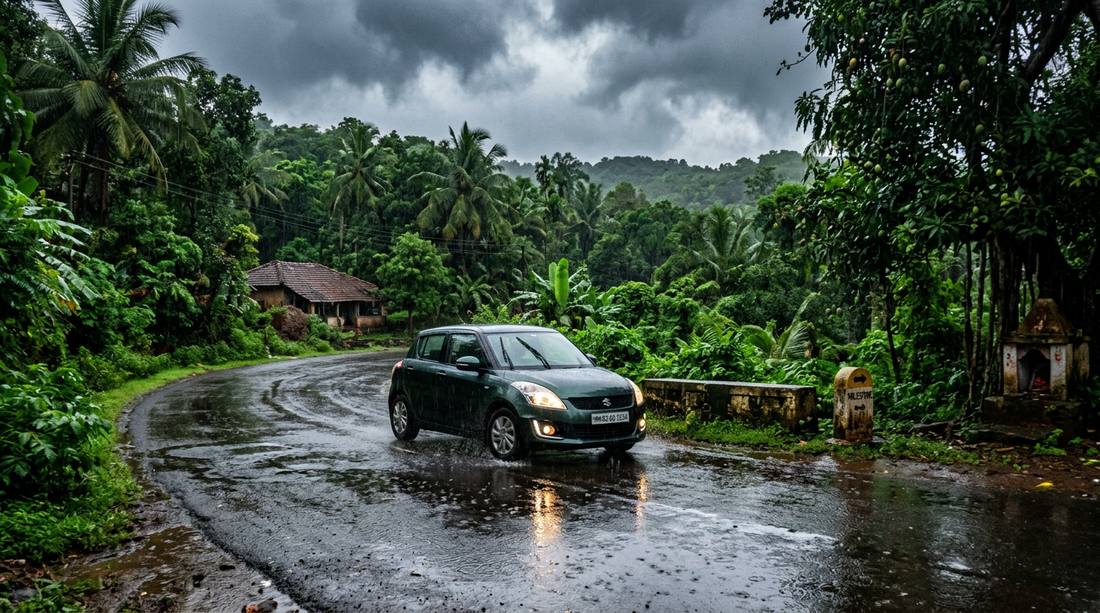
Monsoon significantly changes Goa's road conditions compared to the dry months. While main highways and arterial roads remain fully functional and safe throughout the season, secondary roads and beach access routes can become genuinely challenging in heavy rain. Here is a detailed month-by-month breakdown and road-specific safety guide for your car rental planning.
June – Early Monsoon Onset
The southwest monsoon usually arrives in Goa dramatically in the first week of June with dark skies and heavy initial bursts. Initial rains are heavy but characteristically intermittent, with welcome sunny spells appearing between rain showers. Roads are at their most treacherously slippery during this early period as the first significant rains lift accumulated oil residue and dust from months of dry-season driving. Main highways remain perfectly fine for travel. Some beach access roads begin to show developing potholes from initial water damage. This is actually an excellent time to visit — the dramatic greening of the landscape begins rapidly but driving conditions are not yet extreme.
July-August – Peak Monsoon Intensity
Expect heavy, sustained rainfall with occasional intense 2-3 day stretches of continuous rain without breaks. Some low-lying roads in coastal areas may waterlog temporarily during the most intense downpours, becoming impassable until drainage clears. Visibility can drop dramatically to 20-30 meters during heavy rain bursts — use fog lights (never high beams which reflect off rain droplets). The access road to Dudhsagar may officially close for 2-3 consecutive days during extreme rainfall events. Village roads in South Goa interior can develop significant standing water after prolonged rain. Despite this, Goa's main infrastructure functions normally throughout these months.
September – Retreating Monsoon (Best Month)
Rainfall reduces significantly and becomes more intermittent by mid-September as the monsoon retreats southward. Roads begin drying out gradually but surfaces are still wet enough to require careful driving. This is actually the single best monsoon month to visit Goa — the lush greenery is at its absolute peak density, all waterfalls are flowing at full spectacular force, but driving conditions improve noticeably day by day. Most roads across the state are accessible without difficulty. The landscapes have an incredible post-rain clarity with vivid colors and clean air. September truly offers the magical "best of both worlds" monsoon experience.
Specific Roads to Avoid During Heavy Rain
Based on years of monitoring road conditions for our rental customers, we recommend avoiding these specific sections during heavy rainfall: Low-lying coastal roads near Siolim bridge area, Morjim beach road, and Chapora that flood during high tide combined with heavy rain creating dangerous conditions. The last 2 km to Vagator beach via the narrow winding Ozran descent road. Interior roads deep in Sanguem and Quepem talukas that completely lack proper drainage infrastructure. Any road where you can actually see water flowing across the road surface — never ever attempt to ford flowing water as depth is impossible to judge. With Rentiago's 24/7 helpline, you can always call us for real-time road condition updates before driving to any destination.
3 Best Cars for Monsoon Driving (SUVs Strongly Recommended)
Your choice of rental vehicle matters significantly more during monsoon than any other season in Goa. The wrong car type can transform a magical rainy adventure into a stressful and potentially dangerous experience. Here is our definitive and experience-tested recommendation for car rental in Goa during the rainy months.
Why SUVs Are Essential for Monsoon Travel
Ground clearance is the single most important factor for monsoon driving safety. Goa's roads can rapidly develop 6-12 inch deep puddles during heavy rain events, sometimes within minutes. A standard hatchback with just 165mm ground clearance risks dangerous water entering the engine air intake, potentially causing catastrophic hydrostatic lock, while an SUV with 190-200mm+ clearance handles these same puddles comfortably and safely. SUVs also provide noticeably better traction on slippery wet surfaces due to their wider tires, heavier vehicle weight pressing tires onto the road, and often better traction control systems. The elevated driving position in an SUV provides significantly better forward visibility through rain — this is genuinely crucial when driving in conditions where visibility may be severely reduced.
Our Top Monsoon Vehicle Recommendations
Hyundai Creta (₹1500/day monsoon special rate): Our most recommended all-rounder monsoon vehicle with 190mm ground clearance, excellent electronic traction control system, rain-sensing wipers, and supremely comfortable ride quality on rough wet roads. Kia Seltos (₹1500/day): Nearly identical to the Creta mechanically with slightly sportier handling characteristics that some drivers prefer. Mahindra Thar (₹2500/day): For true adventure seekers only — genuine 4x4 capability with selectable four-wheel-drive for the most challenging muddy roads and water crossings. Maruti Brezza (₹1300/day): Budget-friendly compact SUV option with proven Maruti Suzuki reliability, good clearance, and excellent parts availability across Goa. Toyota Innova Crysta (₹2500/day): Best choice for families — seats 7 comfortably with excellent stability and planted feel even in heavy crosswinds and rain.
Can You Manage with a Hatchback in Monsoon?
If you plan to stick exclusively to main well-maintained highways and city roads (Panaji city, Margao city, NH66 highway), a hatchback like the Maruti Swift can technically work adequately during monsoon. However, if your plans include visiting Dudhsagar Falls, exploring remote South Goa beaches, driving through scenic countryside, or traveling any route that might encounter poor drainage, an SUV is very strongly recommended for safety. The daily price difference between a monsoon-rate hatchback (₹700/day) and a capable SUV (₹1200-1500/day) is genuinely minimal compared to the dramatically increased safety, peace-of-mind, and practical benefit you receive in return.
Essential Car Features for Monsoon Driving
When selecting your monsoon rental, ensure these features are working perfectly: Windshield wipers on both front AND rear (absolutely critical — test at all speeds). Functioning front fog lights or daytime running lights for visibility in heavy rain. Rear window defogger/demister to prevent dangerous interior condensation obscuring your rear view. Adequate tire tread depth (we meticulously check and replace all tires before monsoon season at Rentiago). Working air conditioning system (essential for interior defogging, not just cooling). ABS anti-lock brakes for safe controlled stopping on slippery wet roads — all Rentiago SUVs include ABS as standard safety equipment.
4 Safe Driving Tips for Monsoon in Goa
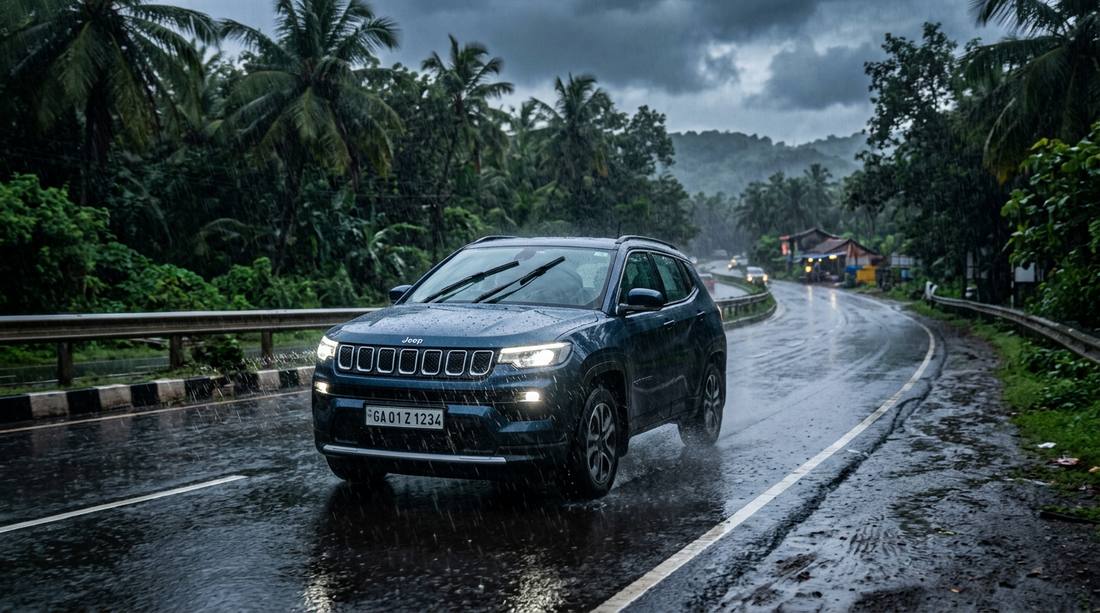
Monsoon driving requires a fundamentally different mindset and skill set compared to dry weather conditions. These essential safety tips, drawn directly from our years of year-round car rental Goa operational experience and customer feedback, will help you navigate Goa's rainy roads with genuine confidence.
Speed and Following Distance
Reduce your speed by 30-40% compared to what feels comfortable in dry conditions. On open highways, maintain 50-60 km/h maximum instead of the usual 80 km/h limit. In towns and villages, keep to just 25-30 km/h to allow for unexpected situations. Critically, increase your following distance behind the vehicle ahead to at least 4 full seconds (more than double the normal dry-weather 2-second gap). Wet road surfaces need 2-3 times more stopping distance than dry roads — this single physics fact is responsible for the vast majority of monsoon road accidents. The most common crash cause during monsoon is simply maintaining habitual dry-weather speeds on wet surfaces.
Visibility Management Techniques
Use dipped headlights (not parking lights) even during daytime rain — this primarily helps other road users see your vehicle approaching. Activate front fog lights in heavy rain when visibility is significantly reduced. Switch on rear fog light if visibility drops below approximately 50 meters. Keep windshield wipers running at the appropriate speed for the rain intensity — wipers too slow mean dangerously reduced forward visibility, while too fast on light rain can be unnecessarily distracting. Use your air conditioning system to actively defog all windows (set to fresh outside air mode rather than recirculation, and point dashboard vents directly at the windshield). Never use high beams in rain — they reflect dramatically off water droplets suspended in the air and actually blind you rather than improving visibility.
Hydroplaning Prevention and Recovery
Hydroplaning (also called aquaplaning) occurs when your tires completely lose contact with the road surface and ride up on a layer of water, eliminating all steering and braking control. It typically happens at speeds above 60 km/h on standing water just a few millimeters deep. If you feel your steering suddenly becoming noticeably light, disconnected, or unresponsive: DO NOT brake hard or suddenly — this will cause an uncontrollable skid. DO NOT turn the steering wheel sharply. Instead, smoothly and gradually ease off the accelerator pedal and let the car slow down naturally through aerodynamic and rolling resistance. Avoid driving through visible puddles whenever safely possible, especially if you cannot clearly see the road surface beneath the water level to judge depth.
What to Do If Stuck in Flooding
If you encounter a flooded road section ahead of you: STOP your vehicle safely on higher ground and carefully assess the water depth visually. If the standing water appears above the center line of your wheel rims (approximately 25-30cm), DO NOT under any circumstances attempt to drive through — the risk of engine hydrostatic lock and dangerous loss of control is too high. Turn around and find an alternate route using Google Maps, or wait for the water to recede (most Goa flooding drains within 30-60 minutes after rain stops). If you are already partly in water and the engine suddenly dies, DO NOT try to restart the ignition — cranking a water-filled engine causes catastrophic and expensive internal damage. Calmly open the door, exit the vehicle safely to higher ground, and immediately call Rentiago's 24/7 emergency assistance line. We will arrange professional towing and provide you with an alternate replacement vehicle.
5 Best Monsoon Destinations to Drive To
Despite the rain — or more accurately, specifically because of it — certain destinations in Goa become absolutely spectacular and unmissable during monsoon season that are merely ordinary during dry months. Here are the best places to visit with your car rental in Goa between June and September for a truly unique experience.
Dudhsagar Waterfalls – India's Monsoon Masterpiece
India's fifth-tallest waterfall at 310 meters is monsoon Goa's undisputed star attraction and the single most compelling reason to visit during the rainy season. The cascade thunders with full awesome power from mid-June to October, creating a massive cloud of mist visible from far away. Drive to Collem village (60 km from Panaji, approximately 1.5 hours) and take the exciting Jeep safari through the Bhagwan Mahaveer Wildlife Sanctuary to reach the waterfall base where you can stand in the spray. Important note: the Jeep track may close temporarily during extremely heavy rainfall days — always call ahead to the Collem Jeep association to confirm availability. Best visited in August-September when water flow is consistently spectacular but the access track is more reliably open than in peak July rains.
Tambdi Surla Temple – Ancient Forest Shrine
Goa's oldest surviving temple dating from the 12th century Kadamba dynasty sits deep within the Bhagwan Mahaveer Wildlife Sanctuary's thick forest. During monsoon, the surrounding ancient forest canopy is incredibly thick, perpetually misty, and alive with diverse bird calls and insects creating a truly enchanting atmosphere. The 65 km drive from Panaji passes through beautiful winding forest roads with occasional waterfall views from the roadside. The temple's intricate black basalt stone architecture photographed against the vivid green monsoon forest backdrop is an absolute photographer's dream composition. With minimal tourist crowds during monsoon, you may have this remarkable 800-year-old temple site entirely to yourself for contemplation.
Sahakari Spice Farm – Aromatic Rainy Day Experience
Goa's famous spice plantations are at their most aromatic, visually lush, and botanically interesting during the monsoon months when new growth is happening rapidly. The warm rain intensifies the fragrance of growing cardamom, climbing pepper vines, vanilla orchids, cinnamon bark, and nutmeg in a way that dry-season visits simply cannot match. Guided tours explaining each spice's cultivation operate year-round without interruption and the accompanying traditional Goan vegetarian lunch buffet is perfect hearty comfort food for a rainy day. Located 30 km from Panaji in the Ponda taluka interior, the drive passes through emerald rice paddies and over swollen brown rivers — genuinely beautiful monsoon scenery throughout the entire route.
Netravali Bubble Lake – Geological Wonder in Pristine Forest
This genuinely unique geological phenomenon — a calm forest lake where nitrogen gas bubbles continuously and mysteriously rise from the bottom to break the surface — is surrounded by some of Goa's densest and most pristine tropical forest that reaches its most beautiful state during monsoon season. The 70-km drive from Margao through winding single-lane forest roads absolutely requires an SUV for safety and comfort but rewards with encounters of pristine undisturbed natural beauty that feels like entering another world entirely. The area surrounding the lake also features several seasonal waterfalls and marked nature trails through diverse ecosystems. Practical tip: carry effective mosquito repellent as they become very active near standing water after monsoon rain.
Safety First: If at any point during your monsoon drive you feel genuinely unsafe due to severely reduced visibility or deteriorating road conditions, immediately pull over at the nearest safe elevated spot and simply wait for conditions to improve. Goa's intense monsoon rain bursts rarely last more than 30-45 minutes continuously before easing. A short patient wait of half an hour can mean the critical difference between a safe enjoyable trip and a dangerous situation.
6 Frequently Asked Questions
Is it safe to rent a car in Goa during monsoon season?
Are beaches accessible by car during monsoon?
What is the cheapest car rental in Goa during monsoon?
Can I visit Dudhsagar Falls by car during monsoon?
Do car rental companies in Goa offer monsoon-specific insurance?
Monsoon Driving Safety Kit
Get our comprehensive monsoon safety checklist covering essential items to carry in your car, emergency contact numbers, live road condition update sources, and expert tips for confident driving in heavy Goa rain.